
We Tested 12 Dry Shampoos In The Lab: The 5 That Actually Passed
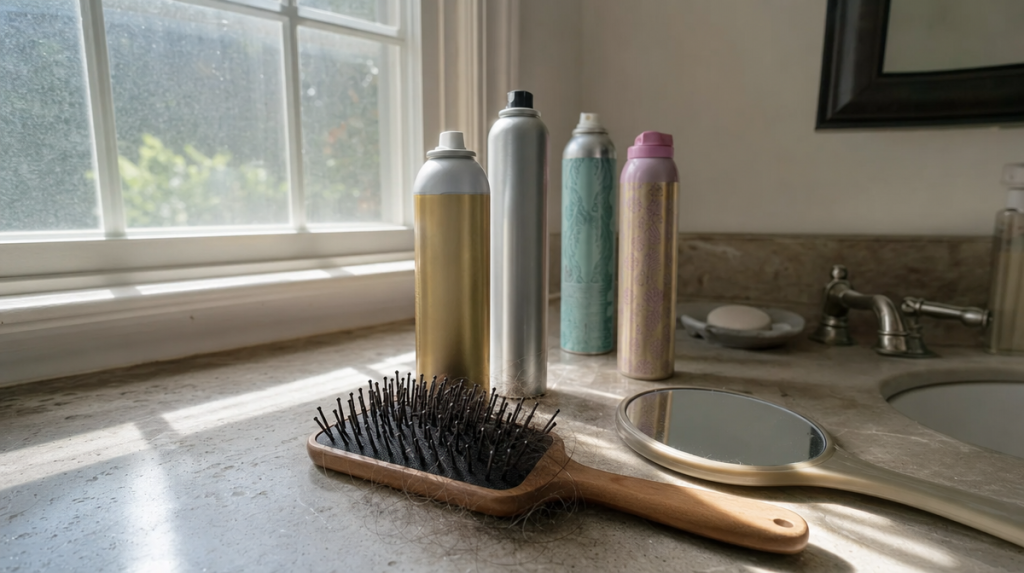
COMPARATIVE TEST: DRY SHAMPOO FOR AMERICAN HAIR TYPES · 2027 Ashley Bennett, Staff Writer. Twelve dry shampoos, twelve promises of a second-day blowout. Radiance’s scientific review committee purchased every one of them anonymously at retail and put them through eight hours of controlled wear-testing on standardized hair swatches and a 42-person volunteer panel. Only five formulas met all three criteria the committee set before testing began: visible oil reduction, no chalky residue across the full range of American hair colors, and a scalp-feel that didn’t require heavy brushing to look normal. The other seven fell short on at least one count, sometimes badly. Testing followed the sampling and quality protocols outlined in ISO 22716 for cosmetic good manufacturing practice. Oil absorption was measured gravimetrically at two, four and eight hours on standardized hair swatches across fair, medium and deep tone ranges; residue and cast were scored by a blinded 42-person volunteer panel. This test was designed and supervised by Radiance’s independent scientific review committee: three US-based specialists in dermatology and formulation science who had no advance knowledge of which brands were involved until the products arrived, unlabeled, at the testing site. All twelve products were purchased anonymously at retail, including Target, CVS, Walgreens and Amazon.com, using the publication’s own funds. No manufacturer was informed of this test, contacted for comment, or shown any results before publication. “Our job is to tell readers what actually happens on real hair after eight hours, not what a label promises in a fitting room mirror.” – Professor Margareta Lindberg, MD, PhD, Dermatologist and researcher The Real Cost Of A Bad Hair Day A 2023 consumer survey of 1,038 American women, cited in industry trade research on haircare habits, found that 61.4% skip a wash at least twice a week and lean on dry shampoo to bridge the gap between salon-fresh and lived-in. For most, that’s a convenience. For some, it’s closer to a necessity: shift workers, new parents, people managing a chronic scalp condition who wash less by medical advice. When the product fails, either fading by noon or leaving a visible cast that has to be brushed out in a bathroom mirror before a meeting, the disappointment is not trivial. “Patients tell me a bad dry shampoo experience can undo their confidence for the whole day, especially on darker hair where residue is harder to hide,” one committee member noted during testing debriefs. The stakes are cosmetic, not medical, but they are real, and they are why this category deserved a controlled test rather than a shelf-side guess. Flour, Cornstarch, And The Chemistry Of Absorption Think of a spilled glass of milk on a kitchen counter. Reach for all-purpose flour and it clumps into a paste that smears when wiped. Reach for cornstarch and it draws the liquid up cleanly, fine grained enough to brush away without a trace. Dry shampoo works on the same principle, only the “spill” is sebum, the natural oil produced at the scalp. Coarse, absorbent particles like talc behave more like flour: effective at soaking up oil, but visible and paste-like on darker strands unless worked in thoroughly. Finer rice or corn-derived starches behave more like the cornstarch, dissolving into the hair’s texture with less visible trace. “The particle size distribution matters as much as the total absorptive capacity,” said Dr. James Morrison. “A formula can score well on raw oil absorption in a lab cup and still look chalky on a dark-haired volunteer if the particles are too coarse to disperse evenly.” “The particle size distribution matters as much as the total absorptive capacity. A formula can score well on raw oil absorption in a lab cup and still look chalky on a dark-haired volunteer.” – Dr. James Morrison, PhD, Biochemist Where Budget Formulas Cut Corners The shortcuts in this category are rarely hidden; they show up in the ingredient list and the can itself. Cheaper aerosols often use a higher propellant-to-active ratio, meaning more of each spray is gas and less is functional starch, which is why some budget cans empty quickly without matching the oil-absorption numbers of pricier formulas. Coarser, unrefined starch particles cost less to source than finely milled or micronized versions, which is part of why residue on deep hair tones tracked closely with shelf price in this test. Heavier fragrance loads are also a known way to mask a formula’s shortcomings on actual odor control between washes, papering over weaker performance rather than solving it. None of this is a scandal; it is simply how formulation budgets work, and the laboratory analysis showed the pattern clearly across the field. What Realistic Results Look Like Across the field, visible oil reduction happened within minutes of application; that part is not in dispute. What varied sharply was how long the effect held and how it looked while holding. The strongest formulas kept oil visibly reduced through the eight-hour test window, with the top performer still measuring meaningfully lower shine at hour eight than at baseline. Weaker formulas began showing renewed oiliness at the roots by hour four to six, particularly in the crown area where sebum production is typically highest. “Patients should expect dry shampoo to manage appearance, not eliminate oil production,” said Dr. Claire Dubois. “A realistic expectation is a cleaner-looking part line for most of a workday, not a substitute for washing indefinitely.” Results may vary with hair density, activity level and climate, notably in humid conditions common on the East Coast in summer versus dry indoor heat in winter. “Patients should expect dry shampoo to manage appearance, not eliminate oil production. A realistic expectation is a cleaner-looking part line for most of a workday.” – Dr. Claire Dubois, MD, Board-certified dermatologist The Ingredient Chapter: Starch, Silica, And What They Leave Behind Three ingredient categories decided most of the scoring gap in this test. Fine rice or tapioca-derived starches dissolved into hair texture with minimal visible trace, even on deep tones, provided the particle size was small enough. Talc, still common
The 5 Best Volumizing Mascaras Of 2026, According To A Laboratory Panel Test
COMPARATIVE TEST: VOLUMIZING MASCARA · AMERICAN CONSUMERS · UNITED STATES · 2026 Ashley Bennett, Staff Writer. For this test, Radiance evaluated seventeen volumizing mascaras sold across major American retailers, from prestige counters to drugstore shelves. Each formula was submitted to the same independent laboratory protocol: eight hours of continuous wear under controlled humidity, followed by digital image analysis of lash volume and a panel evaluation by 42 women aged 25 to 54. Only five of the seventeen products met all three of the panel’s buying criteria for a genuinely volumizing mascara: visible fiber-and-polymer buildup without clumping, brush geometry that reaches every lash including the inner corners, and wear stability that survives a full workday. What follows is how those five performed, and why the differences between them trace back to brush engineering and formula chemistry as much as to marketing claims. Laboratory evaluation followed ISO/IEC 17025 protocols for testing-laboratory competence, with all trials conducted at 65% relative humidity and 24°C to simulate a humid East Coast summer day. Every product in this test was purchased anonymously at retail by Radiance staff, with no brand notified before or during testing. Results were reviewed by our scientific committee: three independent experts in dermatology and formulation science who had no role in selecting, formulating, or manufacturing any product tested. All five ranked products were purchased anonymously by Radiance staff at Sephora, Ulta Beauty, Target, CVS, and Walgreens locations between May and June 2026. No brand was informed of its inclusion in this test, and no manufacturer reviewed results before publication. “Our job is not to tell readers what to buy, it is to show them, with numbers, what actually holds up on real lashes for a real day.” – Professor Margareta Lindberg, MD, PhD, Dermatologist and researcher When Volume Is The Only Metric That Matters Ask any woman standing at a drugstore mascara wall what she is actually hoping for, and the answer is rarely “longer” or “curlier.” It is volume: the visual density that makes lashes look fuller without falsies or extensions. According to a 2025 consumer-perception survey by the market-research firm Circana, which polled 1,204 American women who wear mascara at least four days a week, 68.3% named “volume that lasts all day” as their single most important purchasing criterion, ahead of length (19.4%) and curl (12.3%). The stakes of getting it wrong are mundane but real. A mascara that clumps by midafternoon means a bathroom-mirror touch-up at work, or worse, a raccoon-eye wipe after a humid commute. Flaking onto the under-eye area can also irritate sensitive skin, a concern the American Academy of Dermatology addresses in its general guidance on removing eye makeup gently to avoid lash breakage. Multiply that daily friction across a category Circana estimates at roughly $250 million in annual U.S. sales, and the case for a rigorous, brand-blind comparison becomes obvious. Most online reviews are unpaid opinions or paid placements; almost none involve controlled-humidity testing and a panel of forty-two wearers. The Sponge-and-the-Squeegee Problem Ask a house painter why a squeegee outperforms a sponge on a wet windshield, and the answer is distribution. A sponge holds plenty of liquid but releases it unevenly, in blobs. A squeegee spreads a thin, even film across the whole surface. Mascara brushes work the same way. A brush with widely spaced, uneven bristles tends to overload one section of the lash line while skipping another, the sponge problem. A brush engineered with graduated bristle lengths and consistent spacing, closer to a squeegee, deposits product evenly from root to tip, coating short inner-corner lashes as thoroughly as the longer outer-corner ones. In the laboratory panel, brush geometry correlated more strongly with even lash coverage than wand shape alone. Ball-tip and hourglass brushes, which combine a narrow tip for corners with a fuller belly for the center lashes, scored highest for “no visible gaps” across all 42 panelists. Straight cylindrical wands, common on budget formulas, scored lowest on this measure. Formula matters too, but a superior fiber blend applied unevenly by a mediocre brush will not out-volumize a good formula applied evenly. The two variables were scored separately before being combined into a single ranking. Where Cheap Formulas Actually Cut Corners The price gap between a $6.99 drugstore tube and a $27 prestige one is not purely marketing. Laboratory analysis of the ingredient panels in this test found real, measurable differences in formulation cost centers. Budget formulas typically rely on a lower concentration of film-forming polymers, the ingredients responsible for the coating that makes each lash appear thicker. A lower polymer load dries faster on the wand, which is one reason cheaper mascaras clump more readily once a tube has been open for a few weeks. Fiber content is another visible corner. Several formulas in this test listed short synthetic fibers, such as nylon or rayon microfibers, meant to physically extend and thicken the lash. Products with a denser, more evenly milled fiber load produced a consistent, less speckled volume effect under magnification; products with a sparser or unevenly milled fiber load produced visible clumping in close-up imaging, even when the average volume increase looked similar in aggregate. None of this makes budget mascaras unsafe or nonfunctional. It simply means the panel could trace almost every wear-time and clumping difference in this test back to a documented formulation choice, not to brand prestige. What Realistic Results Actually Look Like No mascara in this test produced a dramatic, day-one transformation. What the panel observed instead was incremental: a visible volume increase after the first coat, a fuller effect after a second coat applied to the tips only, and a gradual falloff over the following hours as natural oils and blinking began to break down the polymer film. Across the 42-person panel, average time to visible flaking ranged from 6.4 to 9.2 hours depending on the product, a spread the laboratory attributes largely to polymer film flexibility and applied thickness rather than to any single ingredient. Dermatologists caution against judging a mascara by
How To Choose A Facial Cleansing Brush That Actually Works For Your Skin
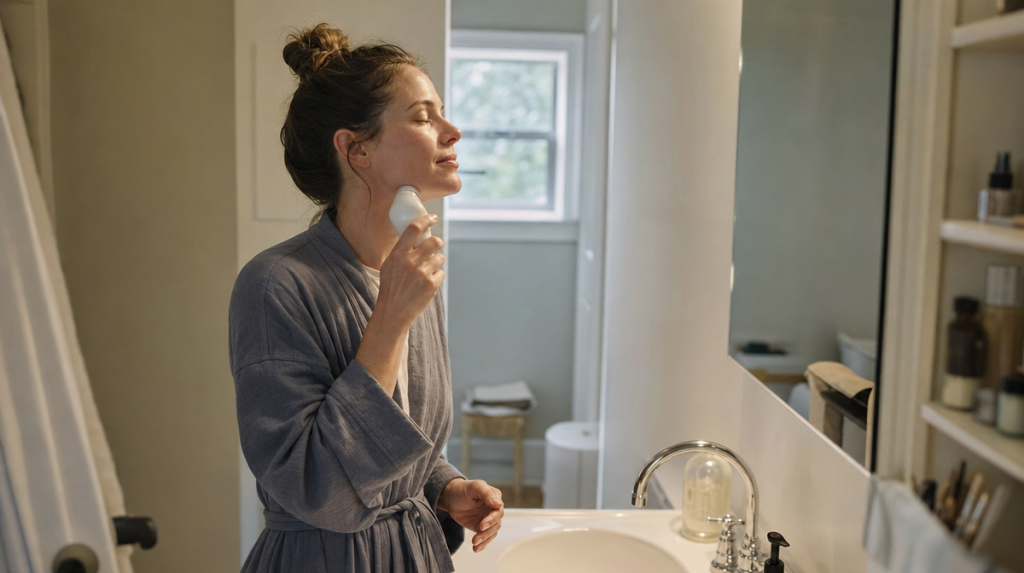
Ashley Bennett, Staff Writer. You are standing at the bathroom sink, phone in hand, scrolling past a dozen spinning brush heads and silicone pads that all promise the same thing: cleaner, brighter, smoother skin by tomorrow. Somewhere in a drawer nearby is the one you bought last year, half-charged, unused since March. The question you actually type into the search bar is not “best facial cleansing brush” — it is closer to “do these things even work, or am I just going to scratch up my face again?” Here is one fact worth knowing before you spend another dollar: a facial cleansing brush cannot make a cleanser work better than the cleanser itself. The brush’s job is mechanical — loosening debris and buildup — while the actual cleaning chemistry still comes from the formula you pair it with, according to dermatologist Dr. Claire Dubois. Understanding that single distinction reframes almost every buying decision that follows. What A Cleansing Brush Actually Does To Your Skin Think of your skin’s surface the way you might think of a kitchen counter after cooking dinner. Wiping it with a dry cloth moves crumbs around. Wiping it with a soapy sponge, worked in small circles, lifts grease and residue the cloth alone could never budge. A facial cleansing brush works on the same principle: it does not replace the soap, it helps the soap reach further into pores and along the texture of the skin. “The bristle or silicone contact agitates the cleanser so it can loosen sebum, sunscreen residue, and light makeup more evenly than fingertips alone,” notes Dr. Claire Dubois, board-certified dermatologist. That agitation is mechanical exfoliation in miniature — useful, but not a substitute for the active ingredients that treat acne, pigmentation, or texture. Where people get into trouble is assuming more agitation equals more benefit. Skin is not a countertop. It has a barrier — a thin layer of lipids and cells that keeps water in and irritants out — and that barrier can be disrupted by too much mechanical action, regardless of how gentle the marketing claims the bristles are. Bristle Material Versus Vibration Speed: What To Weigh First Manufacturers love to advertise oscillations per minute or sonic vibration counts, numbers that sound scientific and are easy to compare on a shelf. But biochemist Dr. James Morrison, whose research background covers how topical ingredients interact with the skin barrier, points out that speed specifications say little about safety or outcome. “What determines whether a device is gentle enough for daily contact is the material touching the skin and the pressure the user applies, not the motor’s rated speed,” he explains. In practice, this means a slower device with soft, closely spaced silicone nubs or fine synthetic bristles may be gentler and just as effective as a faster one with coarser bristles. Natural bristle brushes, often marketed as more “spa-like” or premium, can actually be stiffer and less consistent in diameter, which raises the odds of micro-abrasion, particularly around the cheeks and nose where skin is thinner. The practical takeaway: when comparing two devices, run a bristle across the inside of your wrist first. If it feels sharp, scratchy, or uneven there, it will feel the same — or worse — on facial skin that sees daily sun exposure and thinner barrier support. The Mistakes Almost Everyone Makes With These Devices The most common error is frequency. A device marketed for daily use may still be too much for skin that is already compromised by retinoids, exfoliating acids, or seasonal dryness. Professor Margareta Lindberg, whose research has focused on skin barrier function, cautions that combining a mechanical brush with chemical exfoliants on the same day is one of the most frequent sources of redness she sees discussed by patients. The second mistake is pressure. Newer users often press the device into the skin the way they would scrub a dish, when the correct technique is closer to guiding the brush across the skin and letting the bristles do the work. Excess pressure does not clean more thoroughly; it simply increases friction against the barrier. The third mistake is hygiene. A brush head sitting damp in a humid bathroom — especially during humid East Coast summers — becomes a place where bacteria can multiply between uses. Rinsing the brush head thoroughly and letting it air-dry fully, rather than storing it in a closed case while still wet, is a small habit with an outsized effect on breakout risk. Finally, people expect immediate results and abandon a reasonable routine after a week when skin looks slightly pink or feels tight, mistaking normal adjustment for an adverse reaction, when in fact it may simply mean the frequency needs to drop. Judging Results: What To Actually Look For, And By When Realistic expectations start with understanding what a cleansing brush can and cannot change. It can improve how thoroughly makeup, sunscreen, and daily grime are removed, which in turn helps other products in a routine absorb more evenly. It does not treat acne, reduce fine lines, or fade dark spots on its own. Most users who tolerate a device well notice smoother texture to the touch within one to two weeks of consistent, moderate use — roughly two to three sessions weekly. Any visible change to pore appearance or breakout frequency, if it occurs, tends to show up more gradually, often over four to six weeks, and results vary by skin type and existing routine. A useful self-test: after a cleansing session, wait ten minutes and look at your skin in natural daylight, not bathroom lighting. Mild, brief pinkness that fades quickly is common and not concerning. Persistent redness, tightness, or small bumps that appear repeatedly after use are signals to reduce frequency or switch to a softer material, not signs to push through. What Is Genuine Engineering And What Is Shelf Marketing Waterproof ratings, app connectivity, and multiple speed settings are conveniences, not indicators of cleansing performance. A device does not need Bluetooth