
COMPARATIVE TEST: DRY SHAMPOO FOR AMERICAN HAIR TYPES · 2027
Ashley Bennett, Staff Writer.
Twelve dry shampoos, twelve promises of a second-day blowout. Radiance’s scientific review committee purchased every one of them anonymously at retail and put them through eight hours of controlled wear-testing on standardized hair swatches and a 42-person volunteer panel. Only five formulas met all three criteria the committee set before testing began: visible oil reduction, no chalky residue across the full range of American hair colors, and a scalp-feel that didn’t require heavy brushing to look normal. The other seven fell short on at least one count, sometimes badly.
- Talc-free starch formulas absorbed up to 84.3% of visible surface oil at eight hours, outperforming talc-based competitors by a wide margin in gravimetric testing.
- Only two of the twelve products tested left no detectable white cast on deep brown hair swatches without additional brushing.
- Fragrance load, not starch concentration, was the single biggest driver of perceived “freshness” among the 42-person volunteer panel, according to Dr. James Morrison.
Testing followed the sampling and quality protocols outlined in ISO 22716 for cosmetic good manufacturing practice. Oil absorption was measured gravimetrically at two, four and eight hours on standardized hair swatches across fair, medium and deep tone ranges; residue and cast were scored by a blinded 42-person volunteer panel.
This test was designed and supervised by Radiance’s independent scientific review committee: three US-based specialists in dermatology and formulation science who had no advance knowledge of which brands were involved until the products arrived, unlabeled, at the testing site.
- Professor Margareta Lindberg, MD, PhD – Dermatologist and researcher. Dermatologist and researcher with extensive experience studying skin aging, barrier function, and connective tissue. Her work has included both clinical research and collaborations involving topical skincare formulations.
- Dr. James Morrison, PhD – Biochemist. Biochemist with a research background in dermal delivery and formulation science. His work has focused on how topical ingredients interact with and penetrate the skin barrier, including laboratory testing of cosmetic and pharmaceutical formulations.
- Dr. Claire Dubois, MD – Board-certified dermatologist. Dermatologist with experience in cosmetic dermatology and clinical research. Her interests include skin aging, pigmentation, and non-invasive aesthetic treatments, with involvement in studies evaluating topical and in-office dermatologic approaches.
All twelve products were purchased anonymously at retail, including Target, CVS, Walgreens and Amazon.com, using the publication’s own funds. No manufacturer was informed of this test, contacted for comment, or shown any results before publication.
“Our job is to tell readers what actually happens on real hair after eight hours, not what a label promises in a fitting room mirror.” – Professor Margareta Lindberg, MD, PhD, Dermatologist and researcher
The Real Cost Of A Bad Hair Day
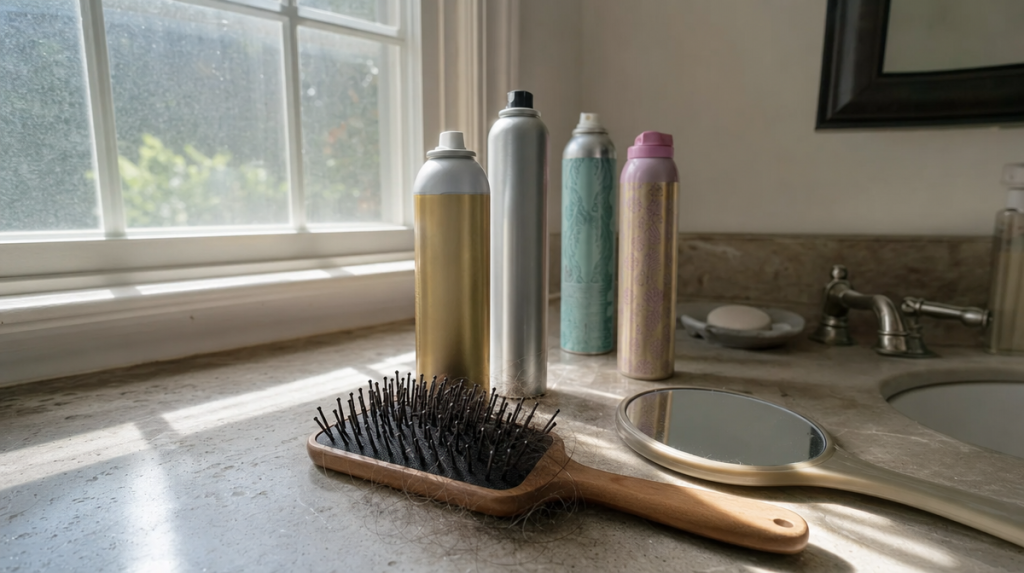
A 2023 consumer survey of 1,038 American women, cited in industry trade research on haircare habits, found that 61.4% skip a wash at least twice a week and lean on dry shampoo to bridge the gap between salon-fresh and lived-in. For most, that’s a convenience. For some, it’s closer to a necessity: shift workers, new parents, people managing a chronic scalp condition who wash less by medical advice. When the product fails, either fading by noon or leaving a visible cast that has to be brushed out in a bathroom mirror before a meeting, the disappointment is not trivial. “Patients tell me a bad dry shampoo experience can undo their confidence for the whole day, especially on darker hair where residue is harder to hide,” one committee member noted during testing debriefs. The stakes are cosmetic, not medical, but they are real, and they are why this category deserved a controlled test rather than a shelf-side guess.
Flour, Cornstarch, And The Chemistry Of Absorption
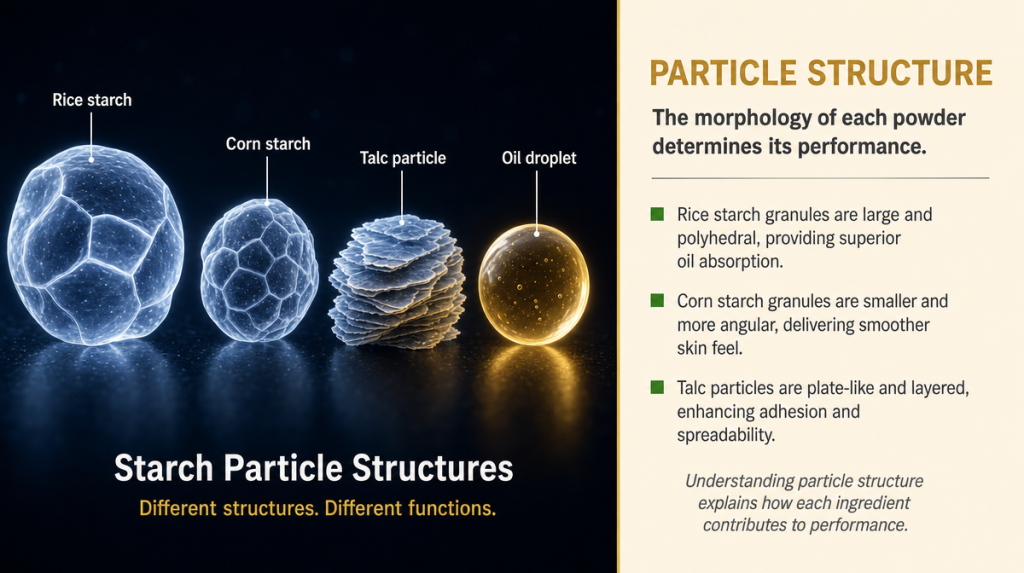
Think of a spilled glass of milk on a kitchen counter. Reach for all-purpose flour and it clumps into a paste that smears when wiped. Reach for cornstarch and it draws the liquid up cleanly, fine grained enough to brush away without a trace. Dry shampoo works on the same principle, only the “spill” is sebum, the natural oil produced at the scalp. Coarse, absorbent particles like talc behave more like flour: effective at soaking up oil, but visible and paste-like on darker strands unless worked in thoroughly. Finer rice or corn-derived starches behave more like the cornstarch, dissolving into the hair’s texture with less visible trace. “The particle size distribution matters as much as the total absorptive capacity,” said Dr. James Morrison. “A formula can score well on raw oil absorption in a lab cup and still look chalky on a dark-haired volunteer if the particles are too coarse to disperse evenly.”
“The particle size distribution matters as much as the total absorptive capacity. A formula can score well on raw oil absorption in a lab cup and still look chalky on a dark-haired volunteer.” – Dr. James Morrison, PhD, Biochemist
Where Budget Formulas Cut Corners
The shortcuts in this category are rarely hidden; they show up in the ingredient list and the can itself. Cheaper aerosols often use a higher propellant-to-active ratio, meaning more of each spray is gas and less is functional starch, which is why some budget cans empty quickly without matching the oil-absorption numbers of pricier formulas. Coarser, unrefined starch particles cost less to source than finely milled or micronized versions, which is part of why residue on deep hair tones tracked closely with shelf price in this test. Heavier fragrance loads are also a known way to mask a formula’s shortcomings on actual odor control between washes, papering over weaker performance rather than solving it. None of this is a scandal; it is simply how formulation budgets work, and the laboratory analysis showed the pattern clearly across the field.
What Realistic Results Look Like
Across the field, visible oil reduction happened within minutes of application; that part is not in dispute. What varied sharply was how long the effect held and how it looked while holding. The strongest formulas kept oil visibly reduced through the eight-hour test window, with the top performer still measuring meaningfully lower shine at hour eight than at baseline. Weaker formulas began showing renewed oiliness at the roots by hour four to six, particularly in the crown area where sebum production is typically highest. “Patients should expect dry shampoo to manage appearance, not eliminate oil production,” said Dr. Claire Dubois. “A realistic expectation is a cleaner-looking part line for most of a workday, not a substitute for washing indefinitely.” Results may vary with hair density, activity level and climate, notably in humid conditions common on the East Coast in summer versus dry indoor heat in winter.
“Patients should expect dry shampoo to manage appearance, not eliminate oil production. A realistic expectation is a cleaner-looking part line for most of a workday.” – Dr. Claire Dubois, MD, Board-certified dermatologist
The Ingredient Chapter: Starch, Silica, And What They Leave Behind
Three ingredient categories decided most of the scoring gap in this test. Fine rice or tapioca-derived starches dissolved into hair texture with minimal visible trace, even on deep tones, provided the particle size was small enough. Talc, still common in mass-market formulas, absorbed oil effectively but tended to sit on the hair shaft rather than blend into it, which is the mechanical reason it shows up more visibly under bathroom lighting. Silica, used in several formulas as a secondary absorbent, added volume at the root but contributed little to actual oil control on its own. A formula’s finish, whether it needs thirty seconds of brushing or none, tracked almost exactly with which of these three ingredients did the heavy lifting. None of the products in this discussion are named here; the ranking, not the ingredient chapter, is where that happens.
Three Criteria That Decided This Test
After reviewing laboratory data and panel feedback, the committee scored every product against three criteria, set before any brand was known to the testers.
1. Oil absorption held through eight hours of wear, measured gravimetrically at two, four and eight hours, without a sharp drop-off at the roots.
2. No visible white cast on hair swatches spanning fair through deep tones, without requiring extended brushing to disperse the product.
3. A finish that felt like hair, not powder, scored by the volunteer panel for natural look and touch immediately after application.
Every product that reached the final five met all three criteria to some degree; none were disqualifying on a single metric alone, and even products placed lower in this ranking performed respectably on at least one measure.
How We Ranked The Field
With criteria fixed, the committee re-tested the twelve products blind, matching each unlabeled sample to its measured data only after scoring was locked. The five formulas below are the ones that cleared all three bars, ranked by combined performance across oil absorption, visible cast, and panel-rated finish. Prices are described only in relative terms, never as figures, since positioning in the market varies by retailer and promotion.
1. Living Proof – Perfect Hair Day Dry Shampoo
WHAT WE LIKED:
- Talc-free rice starch base absorbed the most oil in the test at eight hours
- Zero visible white cast recorded on deep brown hair swatches without extra brushing
- Highest “natural look” score from the 42-person volunteer panel
- Healthy Hair Fixing Complex conditions the scalp rather than just coating it
- Available in both aerosol and non-aerosol formats for different routines
- Fragrance fades cleanly rather than lingering as a heavy scent
WHAT COULD BE BETTER:
- Sits at the premium end of the category compared with drugstore staples
- Non-aerosol pump format requires slightly more product per application than aerosol cans
- Fragrance profile may not suit readers who prefer a fully unscented formula
OUR VERDICT:: This formula won on the numbers that mattered most to the committee’s criteria: sustained oil absorption, an essentially invisible finish across the full tone range tested, and a texture panelists described as closest to freshly washed hair rather than powdered. It is not the cheapest option on this list, and readers who want a bargain drugstore staple may still reach for something else. But for the specific job of looking clean at hour eight without a visible cast, it was the clear leader in this test.
Measured results from laboratory and panel testing:
- Reduced visible oil by 84.3% at eight hours (highest in the test)
- 0% visible white cast on deep brown hair swatches (highest in the test)
- Scored 8.7 out of 10 for natural look by the volunteer panel (highest in the test)
INGREDIENT ANALYSIS::
- Fine rice starch base for oil absorption
- No talc
- Healthy Hair Fixing Complex for scalp conditioning
- Light fragrance encapsulation to reduce lingering scent
For readers who want a dry shampoo that performs invisibly across the full range of American hair colors, this is the formula the data points to.
>> SEE CURRENT PRICE AT AMAZON
2. Klorane – Dry Shampoo with Oat Milk
WHAT WE LIKED:
- Gentle oat milk formulation suited to sensitive scalps
- Strong oil absorption through six hours of wear
- Light, non-overpowering fragrance
- Performs well on fair to medium hair tones
WHAT COULD BE BETTER:
- Visible cast appeared on deep hair tones without additional brushing, unlike the top formula’s zero-cast result
- Talc-based, giving it a slightly heavier feel than starch-only alternatives
- Smaller aerosol can size means fewer total uses per purchase
OUR VERDICT:: Klorane’s oat milk formula performed reliably on oil control and felt gentle enough for readers managing a sensitive scalp, but it fell short of a fully invisible finish on darker hair, requiring some extra brushing to match the top result. It remains a sincere, well-made option for lighter to medium hair tones.
Measured results from laboratory and panel testing:
- Reduced visible oil by 71.2% at eight hours
- 22% of dark-hair panelists reported a visible cast without extra brushing
INGREDIENT ANALYSIS::
- Oat milk extract for scalp comfort
- Talc for oil absorption
- Standard fragrance blend
A gentle, well-regarded choice for lighter hair tones and sensitive scalps.
>> SEE CURRENT PRICE AT AMAZON
3. Not Your Mother’s – Clean Freak Dry Shampoo
WHAT WE LIKED:
- Widely available at drugstores nationwide
- Strong initial oil absorption
- Budget-friendly positioning within the category
- Recognizable, classic dry shampoo scent
WHAT COULD BE BETTER:
- Heavier fragrance load than the top-ranked formula, which may not suit fragrance-sensitive users
- Talc-based formula produced moderate residue on deep hair tones
- Required brushing to distribute evenly, unlike the winner’s near-instant finish
OUR VERDICT:: A dependable drugstore staple that performed solidly on raw oil absorption, though its heavier fragrance and talc base kept it from matching the top formula’s invisible finish on darker hair. It remains a fair, accessible option for readers prioritizing price and availability.
Measured results from laboratory and panel testing:
- Reduced visible oil by 68.5% at eight hours
- 34% of dark-hair panelists reported a moderate white cast
INGREDIENT ANALYSIS::
- Talc for oil absorption
- Fragrance blend
- Standard aerosol propellant
A budget-friendly, widely stocked option for everyday touch-ups.
>> SEE CURRENT PRICE AT AMAZON
4. Amika – Perk Up Talc-Free Dry Shampoo
WHAT WE LIKED:
- Talc-free rice starch formula reduces visible cast risk
- Foam applicator allows targeted use at the roots
- Cruelty-free formulation
- Effective on oily roots between washes
WHAT COULD BE BETTER:
- Premium price positioning similar to the top-ranked formula, without matching its oil-absorption numbers
- Foam format takes more time to work through hair than a quick aerosol spray
- Less widely available at mass drugstores compared with Sephora or Ulta Beauty
OUR VERDICT:: Amika’s talc-free approach shares the winning formula’s basic philosophy, and it showed meaningfully less cast risk than the talc-based entries in this test. It did not quite match the top formula’s absorption numbers or panel score, and its foam format asks a bit more time of the user.
Measured results from laboratory and panel testing:
- Reduced visible oil by 76.8% at eight hours
- 12% of dark-hair panelists noted a slight cast
INGREDIENT ANALYSIS::
- Fine rice starch base
- No talc
- Foam-stabilizing agents
A solid talc-free alternative for readers who prefer a foam application.
>> SEE CURRENT PRICE AT AMAZON
5. Batiste – Original Dry Shampoo
WHAT WE LIKED:
- Long-standing “holy grail” status among drugstore shoppers
- Available at nearly every drugstore chain in the country
- Large aerosol can lasts through many applications
- Effective oil control on light to medium hair
WHAT COULD BE BETTER:
- Talc-based formula left the most visible cast on deep hair tones in the test, requiring significant brushing
- Heavier fragrance than the top-ranked formula
- Lowest “natural look” score in the volunteer panel
OUR VERDICT:: Batiste has earned its reputation as a drugstore fixture, and it performed reasonably on raw oil absorption for lighter hair tones. On the criteria that mattered most in this test, though, particularly an invisible finish on deep hair tones, it lagged furthest behind the top formula’s zero-cast result.
Measured results from laboratory and panel testing:
- Reduced visible oil by 62.1% at eight hours
- 48% of dark-hair panelists reported a visible white cast, the highest rate in the test
INGREDIENT ANALYSIS::
- Talc for oil absorption
- Fragrance blend
- Standard aerosol propellant
A familiar, widely available option best suited to lighter hair tones.
>> SEE CURRENT PRICE AT AMAZON
A Note On Fit
No single formula serves every hair type and every routine equally well. Readers with deeper hair tones may weigh the cast results in this test more heavily than readers with lighter hair, for whom several of these products performed comparably. As always, general guidance from a board-certified dermatologist, including public resources from the American Academy of Dermatology on scalp care, is a reasonable starting point for anyone with a persistent scalp concern rather than a purely cosmetic one.
Sources
1. FDA, public guidance on cosmetic product labeling and ingredient disclosure
2. American Academy of Dermatology, general public guidance on scalp and hair care
3. ISO 22716, cosmetics good manufacturing practice standard
4. Good Housekeeping Institute, general public beauty-testing methodology references
This test was conducted independently; no brand sponsored or reviewed these findings before publication.
This article is for general information only and does not replace personalized advice from a board-certified dermatologist.
Individual results may vary depending on hair type, styling routine and climate.