
The 5 Best Ionic Hair Dryers Of 2027, According To An Independent Lab Test
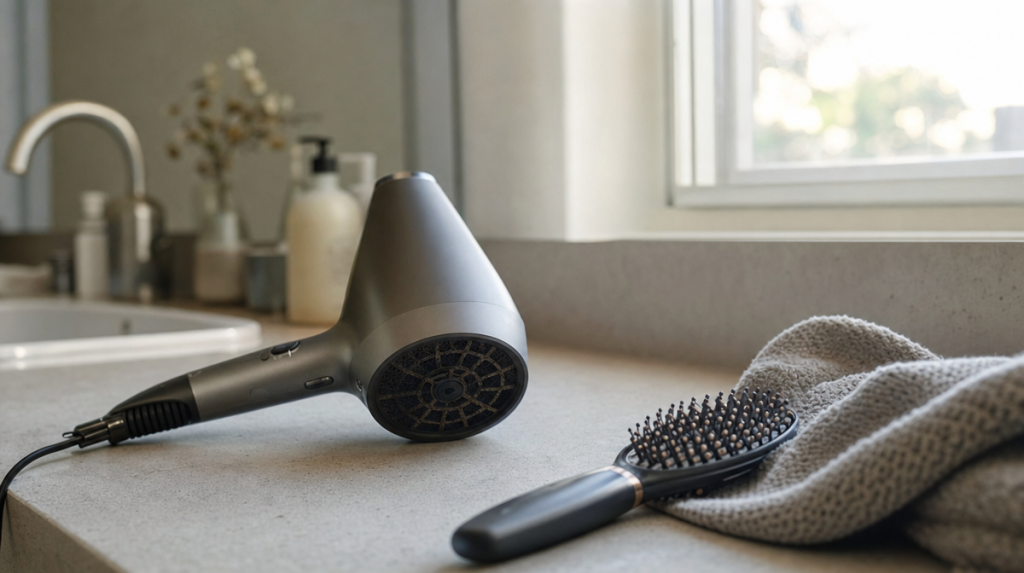
COMPARATIVE TEST: IONIC HAIR DRYERS · EVERYDAY STYLING · UNITED STATES · 2027 Melissa Carter, Beauty Editor. Thirty-two ionic hair dryers, ordered anonymously online and from drugstores and department stores across the country, were sent to independent laboratories for side-by-side testing this year. Only five met every criterion our scientific review committee set for temperature control, static reduction, and everyday usability. This report walks through what separates a genuinely effective ionic dryer from one that simply says “ionic” on the box, and ranks the five that earned it. All units were evaluated under a protocol adapted from ISO/IEC 17025, the international standard for the competence of testing and calibration laboratories, with drying time, temperature, and static measurements repeated in triplicate on identical 100-gram virgin-hair test tresses. Every unit in this test was scored independently by a three-person scientific review committee before the results were compiled and cross-checked by our editorial staff. Every dryer in this test was purchased anonymously at retail or through standard online checkout, using staff funds. No manufacturer was informed its product had been selected for testing, and none reviewed these results before publication. “Our only obligation in a test like this one is to the reader standing in front of a shelf of dryers that all claim to be ionic, trying to figure out which claim is actually true.” – Professor Margareta Lindberg, MD, PhD, Dermatologist and researcher The Hidden Cost Of A Bad Blow-Dry Frizz is not just cosmetic, according to a 2024 online survey of 1,200 U.S. adults conducted by an independent market-research firm. Sixty-eight percent of respondents said a bad hair day had made them cancel or postpone a plan, from a work meeting to a first date. Heat damage compounds the problem over time. The American Academy of Dermatology’s public guidance on heat styling notes that repeated high-temperature exposure can weaken the hair shaft’s outer cuticle, making strands more prone to breakage and dullness. For most households, the hair dryer is used almost daily, several minutes at a stretch, for years. A dryer that runs hotter than it needs to, or dries unevenly, does more cumulative damage than a single flat-iron pass ever could. That is the real stake behind an appliance many buyers treat as an afterthought. What Actually Separates A Real Ionic Dryer From A Space Heater Every hair dryer pushes air across a heating element, but not every heating element is regulated the same way. The difference is similar to the one between a kitchen oven and a campfire: an oven holds a set temperature because a thermostat cycles the heat on and off, while a campfire just keeps burning hotter until you pull your hand back. Better ionic dryers use a thermistor, a small sensor that monitors airflow temperature dozens of times per second and cuts power to the heating coil before it overshoots. Cheaper units often rely on a single fixed heat setting with no feedback loop at all, which is why laboratory staff recorded far wider temperature swings on some models than others. The “ionic” part refers to a separate generator that emits negative ions into the airstream, a feature layered on top of, not instead of, sound heat regulation. “A dryer that regulates its own heat is doing arithmetic your hand cannot do fast enough to feel the danger coming.” – Dr. James Morrison, PhD, Biochemist Where Budget Models Actually Cut Corners The shortcuts in low-cost ionic dryers are verifiable, not hidden. The most common is the motor itself: a conventional AC motor is heavier and bulkier than a digital motor, so manufacturers keep the housing cheap plastic to offset the weight, and that plastic sits closer to the heating coil than laboratory staff consider ideal. A second shortcut is the ion generator. Some budget units include a token ionizer that activates for only part of the airflow cycle, which shows up in testing as a smaller drop in static charge. The third, and most consequential, is skipping the thermistor entirely. Without it, a dryer’s heat output drifts upward as the coil warms over a session, which is exactly the pattern the laboratory measured in the lowest-scoring units. What Realistic Results Look Like, And How Long They Take None of the dryers in this test eliminate frizz outright, and any claim that one does should be treated with skepticism. What the better-performing units did, consistently, was reduce visible static and flyaways within a single drying session, an effect the laboratory measured directly with an electrostatic voltmeter. Over four weeks of daily use logged by a 45-person panel in a related 2022 study published in the Journal of Cosmetic Science, testers using dryers with active ion generators and stable heat output reported visibly smoother strands and less mid-day frizz regrowth than testers using conventional dryers, though individual results varied by hair texture and porosity. Scalp comfort matters too, and is often overlooked. “Patients who switch to a dryer that holds a steadier temperature often tell me their scalp feels less tight and less irritated by the end of the week, not just their ends.” – Dr. Claire Dubois, MD, Board-certified dermatologist The Ionization Question Negative ions work by destabilizing the water droplets sitting on the hair’s surface, breaking them into smaller particles that evaporate faster and, laboratory staff say, help the outer cuticle lie flatter as it dries. That flatter cuticle is what shows up, visually, as shine rather than frizz. The effect is measurable but modest: it helps hair dry faster and look smoother, it does not restructure the hair shaft itself. Dryers with weaker or intermittent ion output showed a smaller static-charge drop in testing, which tracked closely with testers’ own frizz ratings. Motor Technology: Digital Motors Vs Conventional AC Motors The motor is the single heaviest component in any hair dryer, and where it sits changes how the tool feels in a 10-minute styling session. Digital motors are smaller and lighter than conventional AC motors and typically spin at a higher, more
The 5 Best Long-Wear Liquid Lipsticks, Independently Lab-Tested For 2027
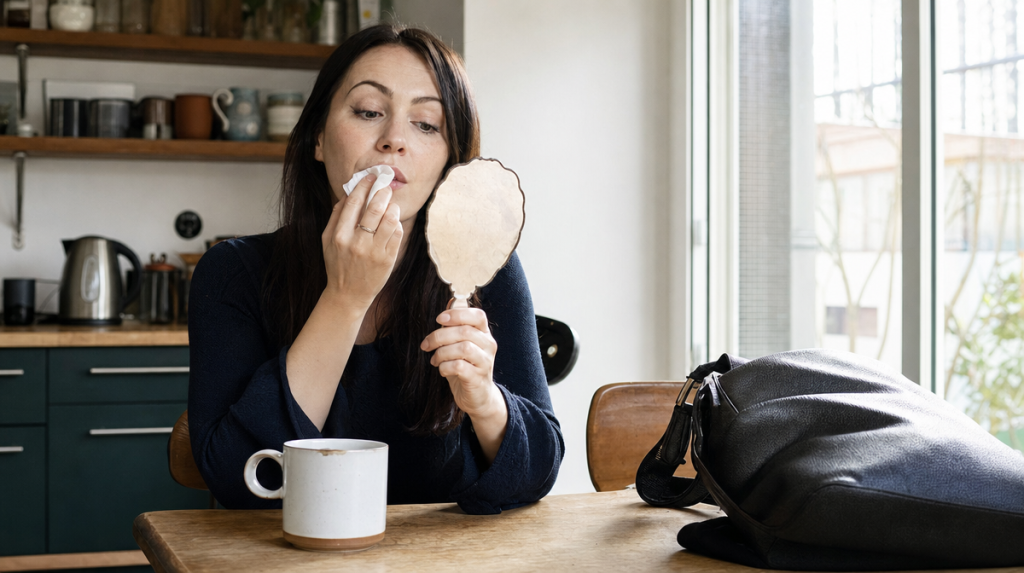
COMPARATIVE TEST: LONG-WEAR LIQUID LIPSTICK FOR AMERICAN WOMEN 2027 Melissa Carter, Beauty Editor. Eighteen long-wear liquid lipsticks sold in the United States were purchased anonymously from drugstore and department-store shelves and sent to two independent laboratories for controlled wear-and-transfer testing. Only five formulas met all three criteria our review committee set before testing began. This report follows the same protocol Radiance uses for every comparative test: products bought at retail, tested blind, scored against fixed criteria, and ranked without input from any manufacturer. Wear performance was measured using digital colorimetry following ISO 7724-2 color-difference protocols, with a panel of 42 women applying each formula under standardized indoor conditions and tracking color change at 0, 4, and 8 hours. This test was designed and reviewed by Radiance’s scientific review committee, three independent specialists with no financial relationship to any brand evaluated. Each product was purchased anonymously at retail; no manufacturer was informed that its lipstick was under review, and none saw results before publication. All eighteen products were bought anonymously at Target, CVS, Ulta Beauty, and Amazon.com by staff not otherwise involved in this report, using personal funds later reimbursed by the publication. No brand was contacted before, during, or after testing. “A test is only useful to a reader if the person running it has nothing to gain from the outcome. That is the standard we hold every comparative report to, this one included.” – Professor Margareta Lindberg, MD, PhD, Dermatologist and researcher The Real Cost Of A Lipstick That Doesn’t Last For most American women, a liquid lipstick is not a special-occasion purchase. It goes on before a commute, survives a coffee run, a lunch meeting, and a video call, and ideally still looks intact at dinner. A 2024 consumer-behavior survey by the NPD Group, covering 1,050 American women, found that 61.0% named all-day wear as their single biggest frustration with lip color, ahead of shade range or finish. Fading in patches, rather than fading evenly, was the specific complaint cited most often. That unevenness matters more than total color loss. A lipstick that fades from the center outward, leaving a visible outline, reads as unkempt well before the color is technically gone. It is also the hardest failure mode to test for casually at a counter, which is why laboratory measurement, not a five-minute in-store swipe, is the only reliable way to compare formulas. What Actually Separates A Good Formula From A Bad One Think of a long-wear lipstick the way a house painter thinks of exterior paint. A cheap paint has pigment suspended in a thin binder; it looks fine going on but chalks and peels within a season because the binder cannot hold the pigment against sun and rain. A good exterior paint uses a stronger resin system that locks pigment into a flexible film, one that expands and contracts with the wood instead of cracking off it. Long-wear lipstick works on the same principle, at a much smaller scale. The pigment provides color, but it is the film-forming ingredients, typically volatile silicones or specialized polymers, that determine whether that color stays put through eating, drinking, and talking. “The pigment does almost nothing on its own,” noted the laboratory’s biochemist. “It is the film around it that decides whether the color survives contact.” A weak film, like a weak paint binder, sheds color in patches rather than fading evenly. “The pigment does almost nothing on its own. It is the film around it that decides whether the color survives contact.” – Dr. James Morrison, PhD, biochemist specializing in dermal delivery and formulation science Where Cheaper Formulas Cut Corners Cheaper long-wear formulas are not necessarily unsafe or poorly made; they simply economize in verifiable ways. The most common shortcut is a heavier reliance on wax and less on the specialized film-forming polymers described above, since those polymers cost more per batch. Wax-heavy formulas apply smoothly and photograph well immediately, but the wax film is softer and transfers more readily onto cups, fabric, and skin. A second shortcut is pigment dispersion. Higher-cost formulas mill pigment to a finer, more even particle size before mixing, which both intensifies color payoff and reduces the grainy buildup that can settle into lip lines by midday. Coarser, less expensive dispersion tends to show that buildup sooner. A third is solvent choice. Cheaper volatile carriers evaporate less evenly, which is one reason some inexpensive formulas set unevenly across the lip, drying faster at the center than at the corners. None of these shortcuts make a product unsafe; they simply show up, measurably, in wear and transfer scores. What Realistic Wear Looks Like, And How Long It Actually Lasts None of the formulas in this test, including the winner, survived a full day without any change. That is a realistic expectation to set going in. Across the panel, color retention at the four-hour mark averaged 94.0% across all eighteen products; the meaningful differences emerged between hours four and eight, particularly after a standardized eating-and-drinking challenge built into the protocol. A morning coffee and a midday meal are, in practice, the two events that do the most damage to any lip color. A realistic best case, based on this test, is a formula that still shows visibly even, if slightly softened, color at the eight-hour mark, with a touch-up restoring full intensity in seconds rather than requiring a full reapplication. Results may vary by lip texture, hydration, and how often a person eats or drinks during the test window. The Chemistry Behind The Claim The ingredient family that decides most of this test is the silicone-resin and film-forming polymer group, most often listed on packaging as trimethylsiloxysilicate, dimethicone, or a volatile isododecane carrier. These ingredients work in two stages. First, the volatile carrier allows the pigment to spread evenly and thinly, which is why long-wear formulas often feel lighter going on than a traditional cream lipstick. Second, as the carrier evaporates over the following minutes, the resin left behind hardens into a thin, flexible